The setting
A precise place beats a vague one: “a café terrace, place Saint-Georges” rather than “in the city”.
Prompt studio · free tool
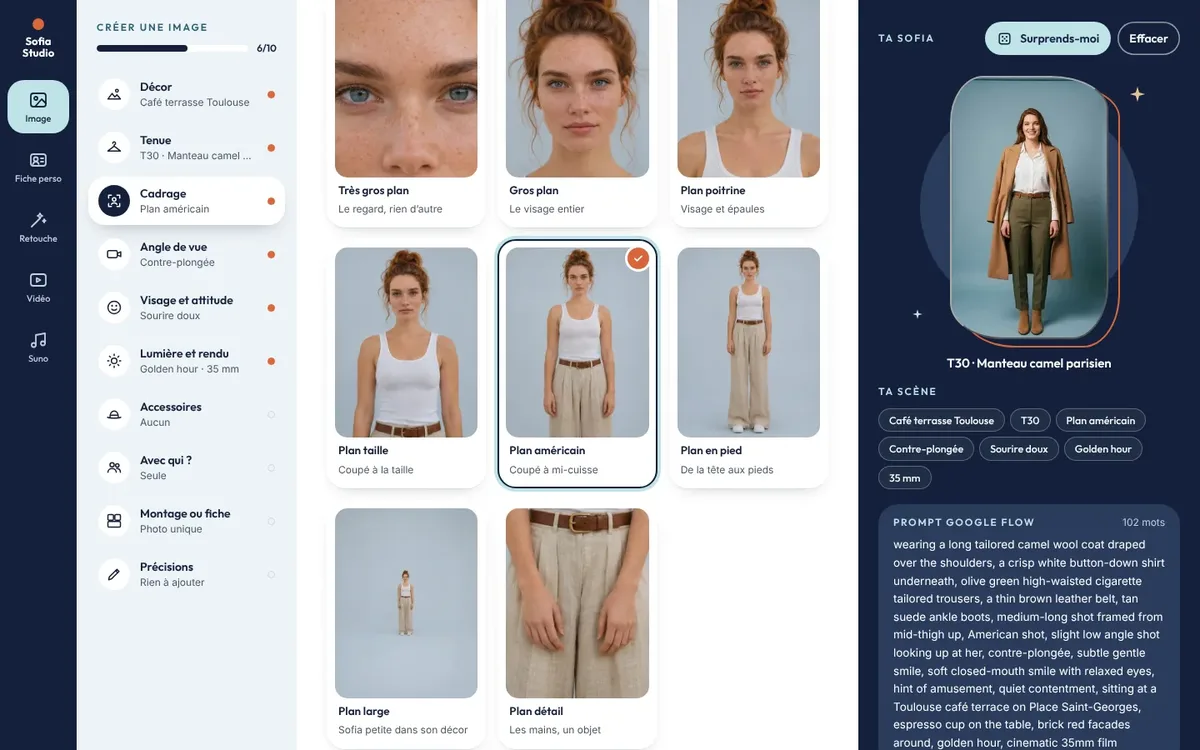
To create Sofia's visuals, I built my own tool. You choose the setting, the outfit, the framing, the angle and the light by clicking on thumbnails, and the prompt writes itself, ready to paste into Google Flow.
Here it is, with the method behind it: what to put in an image prompt, how to keep the same character from one image to the next, and how to prepare a Suno prompt. Pierre-Etienne Noble, generative AI trainer.
The method
A good prompt isn't written in one go: it's assembled. The studio asks the questions in order, and each answer adds a piece to the prompt.
A precise place beats a vague one: “a café terrace, place Saint-Georges” rather than “in the city”.
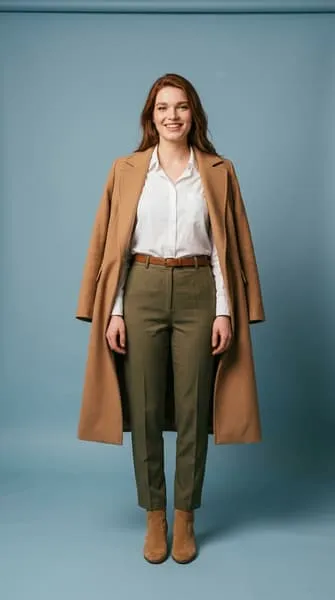
Described piece by piece, colors included. It's what makes Sofia recognizable from one image to the next.
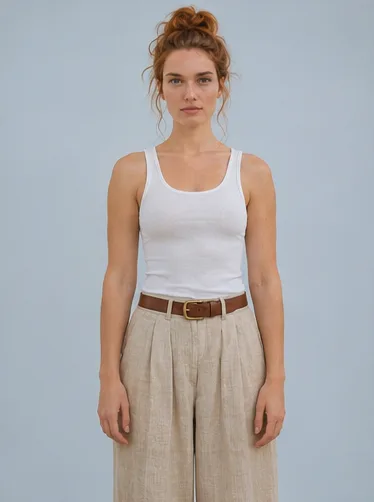
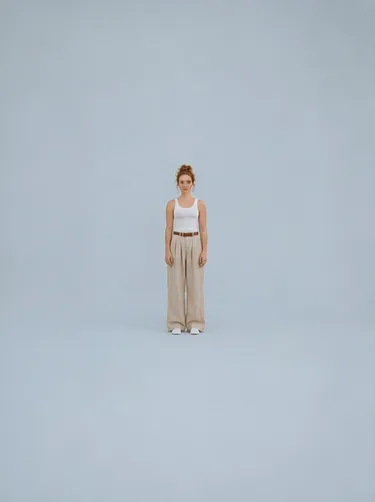
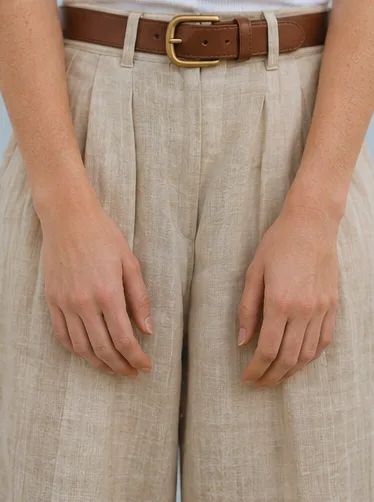
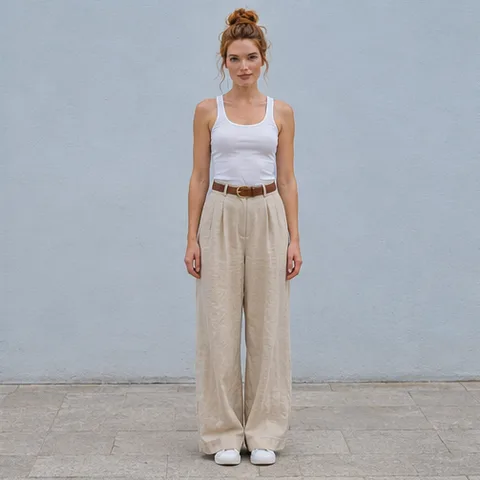
How much of her we see, from extreme close-up to wide shot. A cowboy shot, for example, cuts at mid-thigh.
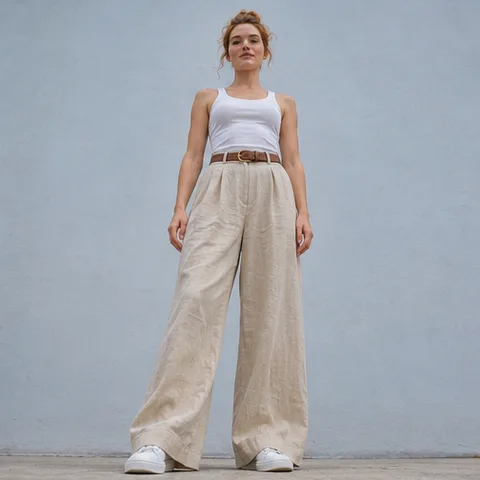
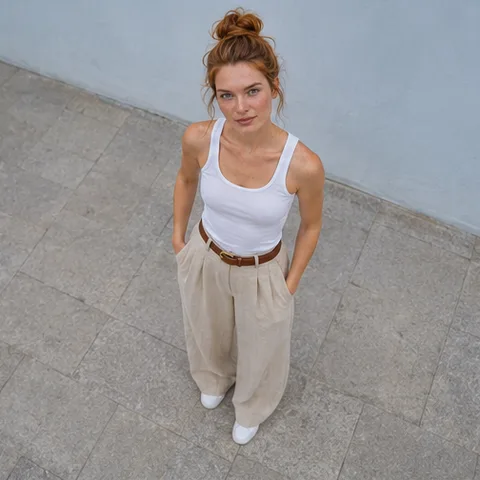
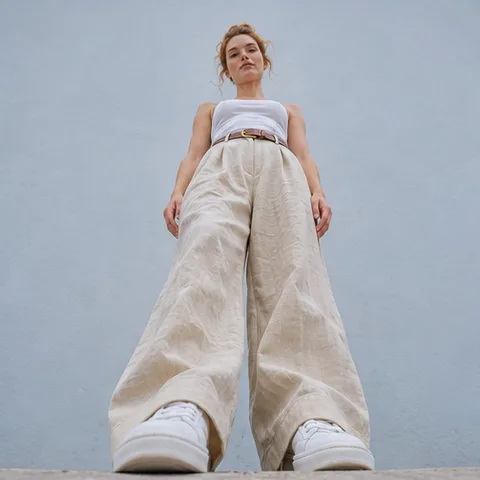
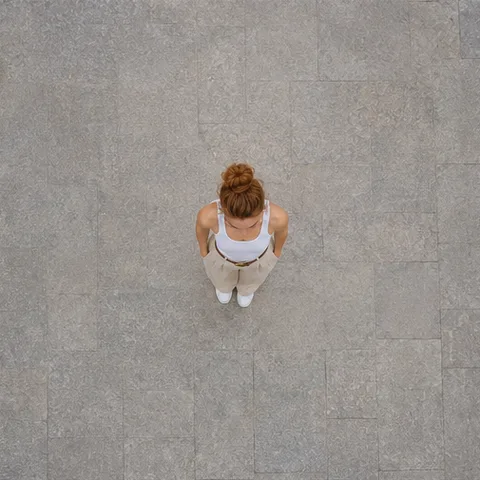
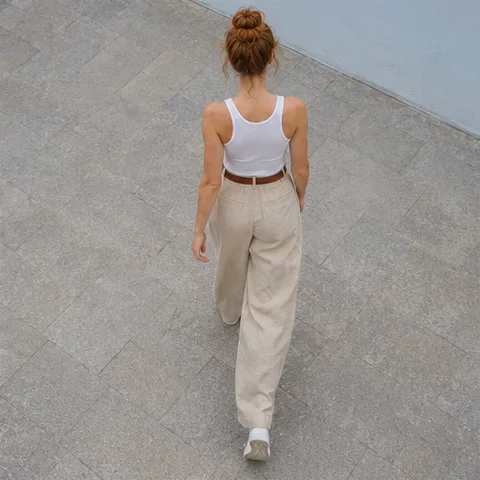
Where we look at her from. A low angle makes her taller, a high angle softens her, a selfie brings her close.
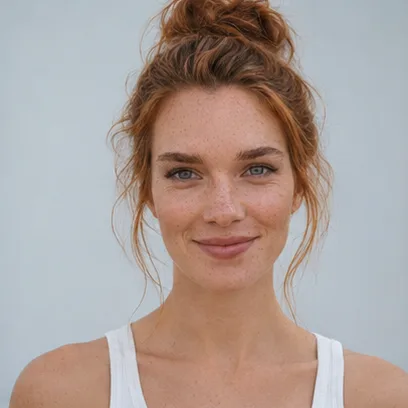
One word isn't enough. Describe the eyes, the mouth, the attitude: “a soft smile, mouth closed, relaxed gaze”.
Golden hour, neon, studio light. Then the camera you imitate: 35 mm film, iPhone, DSLR.
The number refers to the ingredient.
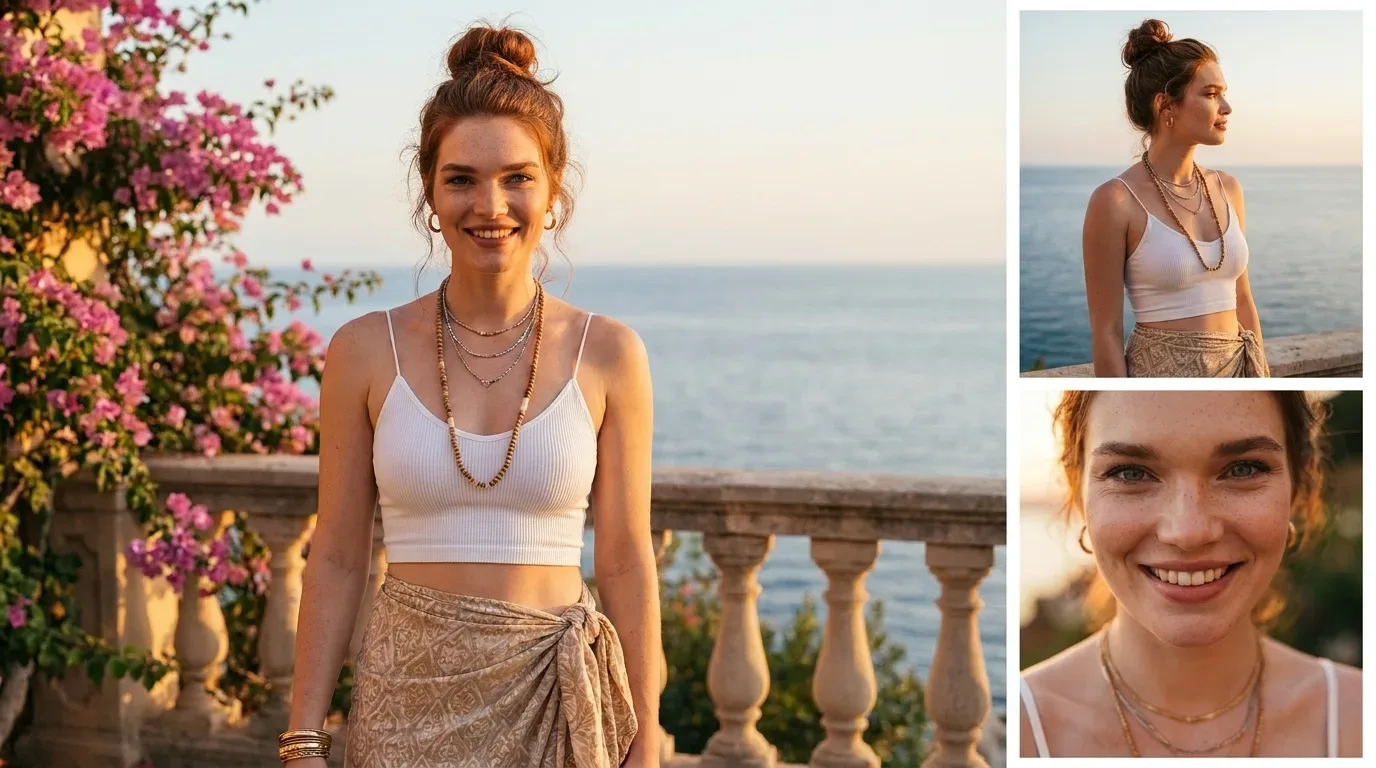
editorial magazine spread, one large hero photo on the left taking 2/3 of the frame and two smaller stacked photos on the right, thin white borders, all photos taken in the same single location, shown from 3 different angles: large left panel frontal view with direct gaze, top-right panel side profile three-quarter view, bottom-right panel extreme close-up portrait, consistent character outfit and single location across all panelslayout, wearing a fitted white cropped tank top with thin spaghetti straps, a beige tan textured patterned sarong wrap skirt with subtle tribal print tied at the hip with a knot, layered silver and wooden beaded necklaces and chokers, a wooden beaded cuff bracelet on the wrist, beach bohemian style2, medium close-up framed from the chest up3, three-quarter view, body turned slightly away from the camera4, natural joyful smile, light and carefree expression, relaxed happiness5, hair in a casual messy high bun with loose tendrils, delicate layered gold necklaces, gold hoop earrings, stacked gold bracelets on wristhair, jewelry, on the stone terrace of a Mediterranean villa, bougainvillea flowers, sea view in the distance1, golden hour, fashion editorial photography, high-end magazine style, polished and composed6, no text, no watermark, no written words on the image
The studio is displayed in French and writes the prompt in English: photography and film terms are more reliable that way.
Visual glossary
The same character, the same outfit: only the camera changes. With the term to write in the prompt.
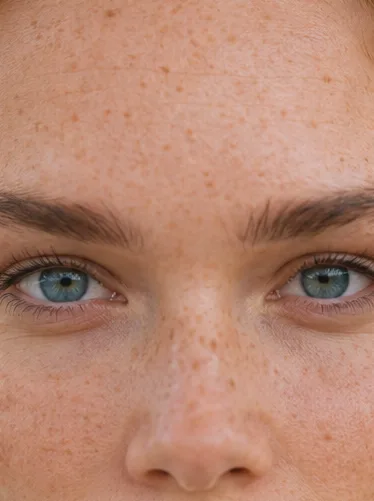
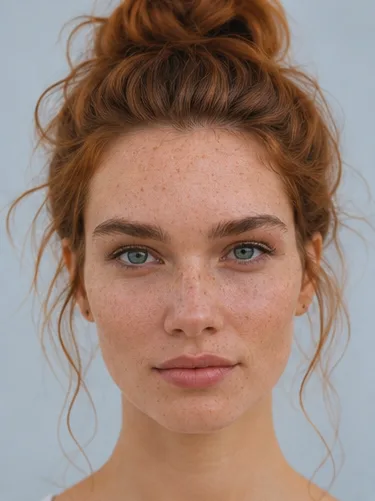
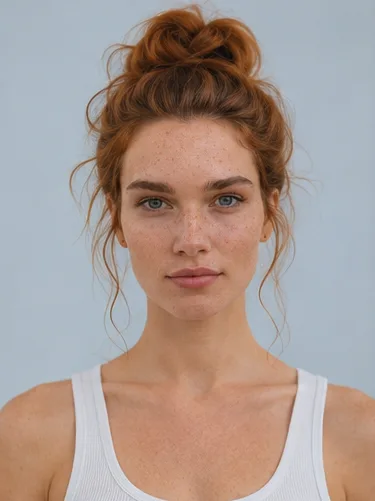
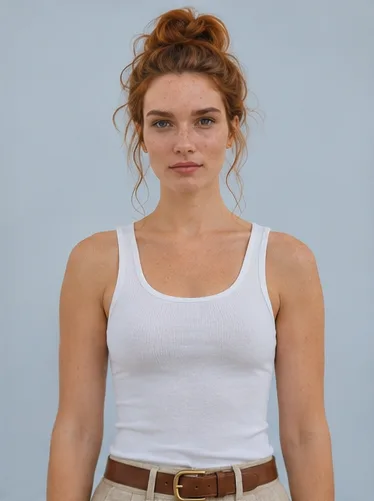
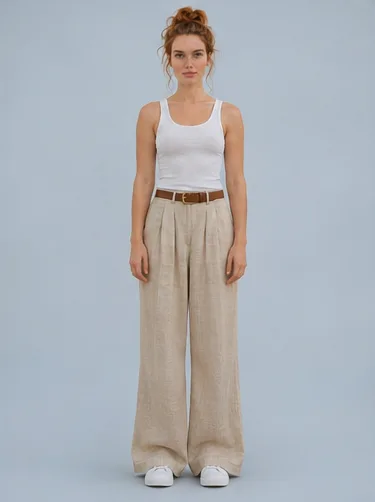
Problem no. 1
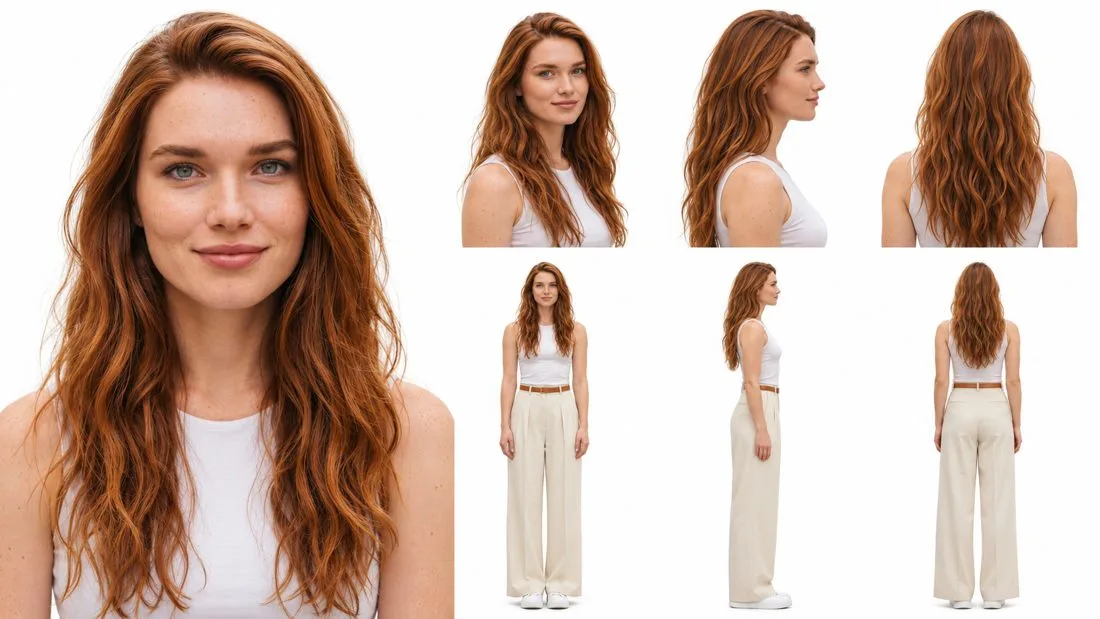
From one image to the next, a generator reinvents the face. The fix: a reference sheet, like the ones animation studios use, given to the tool with every prompt.
And for the music
In Suno, the style and the lyrics play different roles. The studio prepares both, just like for Sofia's songs.
Genre, voice, instruments, mood, tempo, language. No lyrics here.
Organic Pop / Urban Pop, Female vocal, soft & cute tone, Dynamic urban Pop + subtle electronic, Playful but bittersweet mood, -violon, Pop Upbeat, Tempo 100 BPM, French lyrics
The structure in square brackets, and in parentheses how to sing each part.
[Verse] (soft, close to mic, storytelling) [Pre-Chorus] (building energy, vocals open up) [Chorus] (full energy, melodic, singalong)
Plan for 50 to 150 generations to find “the chills”: the right take gives you a physical sensation.
It's designed for Sofia, with her outfits and settings. The method works for any character: that's what we practice in workshops.
FAQ
It's the text you give an image generator to describe what you want to see. The more precise it is (setting, outfit, framing, angle, expression, light, rendering), the more predictable the result.
Generators understand other languages, but photography and film terms (cowboy shot, low angle, golden hour) are more reliable in English. The studio is displayed in French and writes the prompt in English.
I use them in Google Flow for Sofia's images (like the villa render above). The same prompts can be pasted into most image generators, with a few adjustments.
With a character sheet loaded as a reference, and an outfit always described the same way. The studio writes the sheet's prompt from the chosen outfit, hairstyle and accessories.
By separating the style (genre, voice, instruments, tempo) from the lyrics, structured with tags like [Verse] or [Chorus] and singing directions in parentheses.
Yes, it's free to use, with no sign-up. It was designed for Sofia, but the method works for any character.